Blogs Business Consulting Human Resources Learning & Development Sales Development Sales Leadership Sales Recruitment Sales Training sales transformation

Bloojam Highly Commended at ABP Awards for Transforming Sales Performance

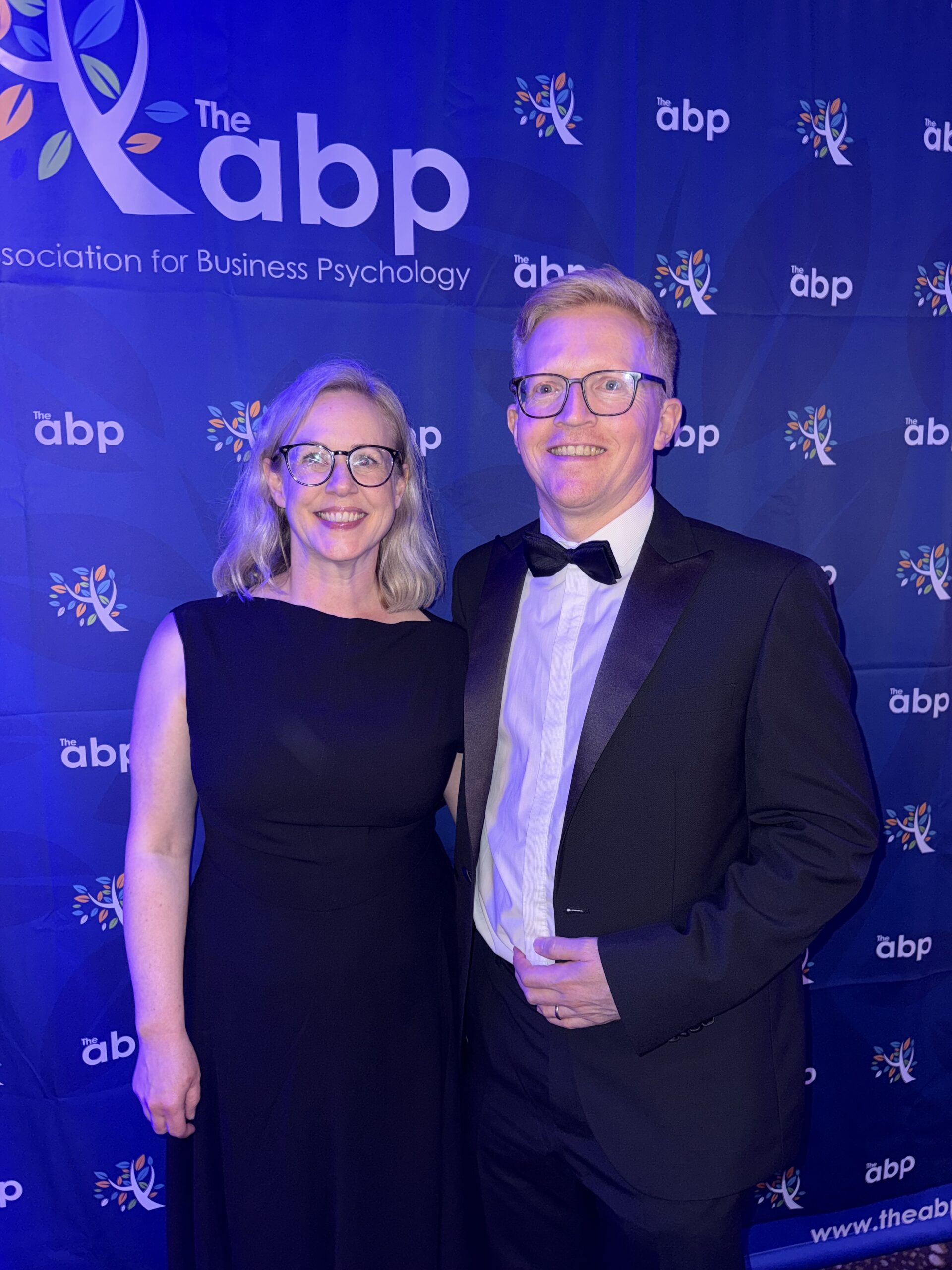
Bloojam has been Highly Commended at the Association for Business Psychology (ABP) Workforce Experience Awards for its work with SCC, applying behavioural science to transform sales performance.

The recognition was awarded for “Transforming Sales Performance in a Technology Business Through Behavioural Assessment and Development”, a programme that used Bloojam’s Acuity® for Strategic Sales framework to help SCC build a more strategic, high-performing sales organisation.

Putting behaviour at the heart of sales performance

SCC embarked on its Sales Transformation Programme in response to a rapidly changing technology market. The business wanted its sellers to move beyond an “order-taking” approach towards more proactive, insight-driven selling, with salespeople acting as trusted advisors to their clients.

A key challenge was that there was no consistent or objective way of defining and measuring the behaviours associated with sales success. This also made it harder for sales managers to identify talent, target development and coach their people effectively.

Bloojam worked with SCC’s Talent and Commercial leadership teams to address this by putting sales behaviour at the heart of the transformation.

Using the Acuity for Strategic Sales Questionnaire (ASSQ), SCC was able to develop an objective, data-driven view of its sales capabilities, identifying individual and organisational strengths and development priorities against an external benchmark.

From behavioural insight to behavioural change

Assessment, however, was only the starting point.

Sales managers were developed as coaches and trained to use insights from individuals Acuity reports to have more focused, personalised development conversations with their teams. Bloojam also worked with SCC to align its Sales Academy content to the Acuity Capabilities, allowing learning to be targeted towards the unique development needs of every seller.

The approach has subsequently extended into recruitment, helping SCC assess candidates against the behaviours associated with high performance. Acuity is now embedded across recruitment, onboarding and seller development at SCC.

Connecting sales behaviour to commercial performance

Crucially, the programme didn’t just identify differences in sales behaviour. It demonstrated that those differences were associated with commercial performance.

A validation study found that sellers whose profiles were most aligned with the Acuity Capabilities averaged 128% of their full-year sales target, compared with 81% for sellers in the bottom quartile. Overall, these top sellers outperformed their peers by 58% in terms of revenue performance.

The findings provided compelling evidence for SCC’s continued investment in seller capability and helped establish a common language around the behaviours associated with successful strategic selling.

Recognising the value of business psychology

The Highly Commended award recognises an approach grounded in business psychology but designed to deliver real-world  organisational impact.

The Acuity framework brings together nine Capabilities associated with success in complex B2B selling, drawing upon established psychological theory and sales research. The ASSQ was developed to measure these capabilities in accordance with EFPA/BPS standards.

For Bloojam, the SCC project demonstrates what can happen when behavioural insight is treated as more than simply a standalone assessment exercise, but becomes part of how an organisation recruits, develops and coaches its salespeople.

Jim Bloomfield, CEO and Founder of Bloojam, said:

“We’re delighted to receive this recognition from the Association for Business Psychology. Acuity was created around a simple premise: to improve sales performance, we need to understand the behaviours that underpin it.

“I’m particularly proud that this work with SCC went far beyond assessment. Together we’ve been able to connect behavioural insight with coaching, development and recruitment – and demonstrate a clear relationship between the Acuity Capabilities and commercial performance.

“Being Highly Commended by our professional body is fantastic recognition of what we’ve achieved together.”

Adam Clark, Chief Revenue Officer at SCC, describes Acuity as giving SCC a “strategic advantage” by connecting sales behaviour directly to business outcomes, with Acuity now embedded across hiring, coaching and training to support a high-performance sales culture.

The recognition reinforces Bloojam’s ambition to help organisations take a more evidence-based approach to sales performance – measuring what matters so that sales behaviour can be understood, developed and improved.

Find out how Acuity® helps organisations to measure and develop the behaviours that drive strategic sales performance here.
Blogs Podcast Professional Services Sales Development Sales Leadership Sales Recruitment Sales Training sales transformation

Why Sales Feels Uncomfortable – And What We Can Do About It

If the word sales makes you feel uncomfortable, you’re not alone.

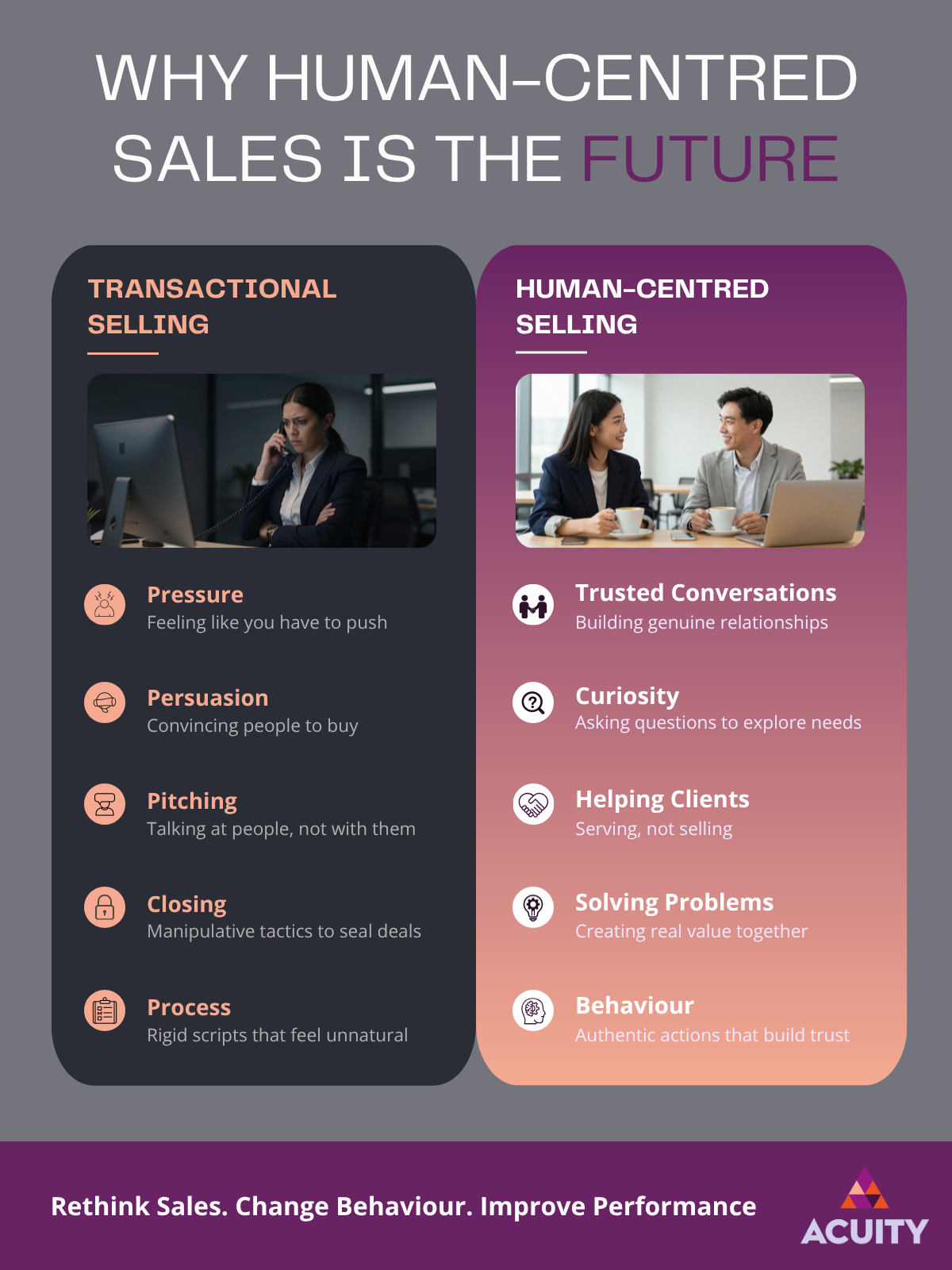
For many people – particularly those in professional services, consulting, technology and leadership roles – selling can feel at odds with who they are. It conjures images of persuasion, pressure and self-promotion rather than helping clients solve meaningful problems.

That was the focus of a recent conversation between our founder, Jim Bloomfield, and host Helen Wada on the Human Wise podcast.

In the episode, Human-Centred Sales: Rethinking Commercial Growth Through Psychometrics, they explored why so many talented professionals struggle with business development, despite being experts in their field. More importantly, they discussed how changing the way we think about sales can transform both confidence and commercial performance.

Drawing on more than 20 years of experience in behavioural psychology and sales assessment, Helen and Jim discuss topics including:

  • Why sales often feels “icky” – and where those beliefs come from.
  • Why the best salespeople are motivated by helping customers, not simply closing deals.
  • How psychometrics can identify the behaviours that drive commercial success.
  • Why leadership and sales have more in common than most people realise.
  • How AI is changing sales, while making human behaviours such as trust, curiosity and relationship-building even more valuable.

At Bloojam, we believe that outstanding commercial performance starts with understanding behaviour. Sales isn’t simply a process to follow; it’s a set of behaviours, motivations and habits that can be measured, developed and coached.

Whether you’re leading a sales team, developing technical experts into trusted advisors, or trying to grow your own business in a way that feels authentic, I hope you’ll find something valuable in this conversation.

Listen to the full episode:

If you’d like to learn more about how Bloojam helps organisations understand and develop the behaviours behind commercial success, explore our Acuity behavioural assessment or get in touch to discuss your team.

Blogs Business Consulting Sales Development Sales Leadership Sales Recruitment Sales Training sales transformation

Why Sales Is Behavioural Before It Is Procedural

For years, organisations have tried to improve sales performance through process. New methodologies are introduced, CRM systems become ever more sophisticated and sales teams are trained to stick to the script. The logic is simple: if people follow the right process, better results will follow.

Process certainly matters. It creates consistency, improves visibility and helps organisations to scale their sales activity. But process alone rarely explains why some salespeople consistently outperform others.

Most sales leaders will have seen this firsthand in their teams. All trained in the same solutions, leveraging the same sales methodology under the same manager, yet will dramatically different results.

The difference is behavioural rather than procedural.

Customers do not experience sales as a process map. They experience it as a human interaction. Buyers don’t leave a meeting thinking about qualification stages or CRM discipline. Instead, they evaluate whether the salesperson felt credible, understood their business, challenged their thinking constructively or gave them confidence to advance their decision-making.

In other words, buyers experience behaviour before they experience process.

This is why two salespeople can follow the same methodology yet create completely different outcomes. One salesperson may ask insightful questions with confidence and curiosity, while another may sound scripted or transactional despite using the same framework. One may handle difficult conversations calmly and credibly, while another avoids tension or struggles to maintain momentum when faced with resistance.

The process may be identical, but the behavioural impact is not.

At Bloojam, research into strategic B2B sales consistently shows that high-performing salespeople are differentiated not simply by what they do, but by how they think and behave while doing it. Human behaviours such as resilience, curiosity, confidence, adaptability and emotional control often have a far greater influence on performance than strict adherence to a sales process alone.

This is particularly important in complex B2B environments where buyers are navigating their own uncertainty, layers of stakeholders and significant commercial risk. In these situations, salespeople are not simply transferring information to the buyer. They are helping the buyer to make sense of the information to enable them to make a decision. That requires deep trust, credibility and emotional intelligence; all of which are behavioural.

Ironically, advances in AI and automation are likely to make the human element even more critical in sales. Technology can increasingly handle transaction activity, analysis and reporting. But the more these tasks become automated, the more valuable human interaction becomes.

Customers will still need someone who can simplify complexity, build confidence, constructively challenge, navigate organisational politics and build alliances. These are not procedural matters. They are fundamental sales behaviours.

This has important implications for sales leaders. Many organisations still focus heavily on activity metrics and training in sales methodology while paying much less attention to the behavioural drivers behind great sales performance. Yet sustainable improvement often depends on helping salespeople to develop greater self-awareness, resilience and clarity.
Process provides structure, but behaviour determines impact.

The strongest sales organisations understand that both matter. They recognise that methodology creates consistency but it is the seller’s behaviour that the customer actually experiences. And in complex B2B sales, it is those human characteristics that ultimately determine whether trust is build, opportunities progress and revenue grows.


Jim Bloomfield is Managing Director of Bloojam Consulting with over 20 years’ experience of applying Business Psychology to develop salespeople and leaders. He has successfully delivered projects globally across Europe, Middle East, North America and Australasia to support clients to achieve their growth ambitions.

Bloojam have developed the Acuity for Strategic Sales psychometric assessment, a measure of the key capabilities required for success in B2B sales, which was ‘Highly Commended’ at the ABP Awards 2026. He is a member of the Association of Business Psychology (ABP) and the British Psychological Society (BPS). 

Blogs Consulting Learning & Development Professional Services Uncategorised

Reframing Sales: A Behavioural Capability for Professionals

Many organisations treat sales performance as a matter of getting the right process in place. But in complex B2B environment, it is seller behaviour that is the key differentiator. The best salespeople are motivated, resilient, curious and excel in stakeholder engagement.

As the rush to invest in AI and automation continues apace, the human side of commercial performance remains critical to business growth. Our founder Jim Bloomfield explored this topic further in a recent article published by The Association for Business Psychology which is republished below:

Introduction

Many people feel uncomfortable with selling. For Business Psychologists, this discomfort can be particularly acute. A discipline grounded in ethics, evidence and human behaviour can feel misaligned with our traditional notions of sales as a ‘dark art’ often associated with exerting undue pressure on sceptical customers.

Yet to really have an impact upon the business world, Business Psychologists must sell. Every day we sell ourselves, our ideas and the value that our profession can bring to bear on complex organisational people and culture issues. It’s how we show up in these situations that impact our ability to influence at the highest levels. The question is not whether we need to sell, but how we can learn to sell effectively.

Applying a Behavioural Lens to Sales

Conventional approaches have tended to focus on articulating clear processes and rigid methodologies that remove the human element and reduce sales to a series of formal steps that, if executed correctly, will lead to a successful outcome. However, our research into high performance in complex, business-to-business environments show that this is the wrong approach. Drawing on a wide body of psychological and sales research, the Acuity for Strategic Sales framework (see attached whitepaper) offers a different perspective, by defining a set of core behavioural capabilities that underpin effective sales performance.

The model comprises three interconnected Dimensions:

  • Personal Drive – an individual’s energy, belief, and resilience when engaged in sales activity
  • Sales Focus – their capacity to turn expertise into insights that position themselves as a trusted advisor to clients
  • Interpersonal Insight – their appreciation of the needs of different stakeholders and willingness to adapt behaviour to strengthen client engagement

Acuity for Strategic Sales Framework

Together, these Dimensions reposition human behaviour as the fundamental driver of success in sales. Clearly, we as Business Psychologists have a lot to contribute to the conversation.

An Opportunity for Business Psychologists

Business Psychologists, like other professionals who have worked hard to build their technical knowledge and expertise over many years, find it difficult to accept their role as commercial influencers.

There are three common reasons for this that we see when working with clients. First, there can be a reluctance to engage in proactive “selling,” with a preference for organic demand or referral-based work. Second, there is often a belief that expertise alone will create impact without the need to actively shape client thinking. Third, even experienced practitioners may hesitate to challenge clients directly, particularly where this introduces tension into the relationship. As a result, many technically capable people become frustrated by their inability to influence key business decisions.

Acuity in Action

A recent sales transformation programme within a large technology organisation illustrates Acuity’s behavioural approach. The organisation faced a familiar challenge: its salesforce was technically strong but commercially limited. Sellers were described as “inch wide, mile deep” – able to engage in detailed product discussions, but less effective at identifying broader client needs or positioning themselves as strategic partners.

Critically for the business, there was no shared understanding of what effective sales behaviour looked like, nor a consistent way to assess or develop it. Using the Acuity framework, the organisation was able to introduce a behavioural blueprint across the sales teams. Individuals were evaluated using our Acuity psychometric tool, with managers trained to use the reports in their regular coaching conversations.

The results were significant. Sellers who demonstrated stronger alignment to the Acuity Capabilities substantially outperformed their peers in revenue terms. Just as importantly, the quality of their client conversations shifted – from transactional exchanges to more strategic, insight-led engagement.

How to Apply the Acuity Capabilities

For Business Psychologists, the Acuity Capabilities provide a practical framework for enhancing influence in our own client work.

1. Personal Drive: Reframing the Role of Sales

At its core, Personal Drive reflects intrinsic motivation, goal clarity, and resilience.

For psychologists, this begins with a reframing. Sales is not about persuasion; it is about helping clients make better decisions. This shift enables a more authentic engagement with commercial activity, grounded in purpose rather than discomfort.

Clarity of intent is equally important. Setting specific goals, not only for revenue, but for strategic conversations and opportunities, can sharpen focus and increase impact particularly if we break these down into specific actions and activities.

2. Sales Focus: From Problem-Solving to Problem-Finding

A defining feature of high-performing salespeople is their ability not just to solve problems, but to redefine them.

For Business Psychologists, this represents a significant opportunity. With our grounding in objective evidence, we are well placed to bring new perspectives to client challenges. However, this requires moving from being responsive to our clients to something more proactive.

Influential practitioners will seek out conversations where they can challenge assumptions and help clients to recognise the implications of their current approach, including the often-overlooked cost of inaction. In doing so, they shift from being service providers to trusted advisors.

3. Interpersonal Insight: Balancing Empathy and Challenge

The ability to understand and adapt to others is important to all aspects of work.

While empathy is often a well-developed capability among psychologists, the Acuity model highlights the importance of balance. Too much emphasis on harmony can limit effectiveness, particularly where a client’s thinking needs to be challenged.

Research suggests that the most effective influencers are those who combine perspective-taking with adaptability – adjusting their style, introducing constructive tension where needed, and engaging multiple stakeholders with differing priorities.

For Business Psychologists, this means moving beyond building rapport with our clients to a more deliberate and strategic use of our interpersonal skills.

From Expertise to Influence

The implications of this perspective are clear.

Sales, when understood behaviourally, is not at odds with Business Psychology. In fact, the two align perfectly. By engaging more deliberately with the behavioural dynamics of sales, through motivation, insight, and interpersonal effectiveness, Business Psychologists can enhance both their commercial impact and their contribution to organisational outcomes.

A Final Reflection

Sales will continue to feel uncomfortable for many of us (including myself). But like any other aspect of work, we can all learn, improve, and develop our capabilities. Reframed through a behavioural lens, sales becomes something more aligned with the values of Business Psychology: essentially a people-focused discipline where, by sharing our own knowledge and expertise in the right way, we add value and help our clients to think differently, decide more effectively, and make better decisions that ultimately drive business growth. In that sense, it is not a peripheral skill but a core professional capability.


Jim Bloomfield is Managing Director of Bloojam Consulting with over 20 years’ experience of applying Business Psychology to develop salespeople and leaders. He has successfully delivered projects globally across Europe, Middle East, North America and Australasia to support clients to achieve their growth ambitions.

Bloojam have developed the Acuity for Strategic Sales psychometric assessment, a measure of the key capabilities required for success in B2B sales, which is shortlisted for the ABP Awards 2026. He is a member of the Association of Business Psychology (ABP) and the British Psychological Society (BPS).

Blogs Business Consulting Professional Services Sales Development Sales Leadership Sales Recruitment Sales Training sales transformation

The Psychology Of Goal Setting In Sales

It’s a new year and there’s lots of blogs and articles doing the rounds on how to set goals. But why are they important? And what is the psychology behind them? Read on to find out more.

Why do goals work?

Quite simply setting goals is shown to increase one’s motivation. The simple act of articulating what you want to achieve enables one to take the next step and to consider what is required to achieve the desired result. In fact, research shows that setting goals can increase achievement by up to 30%.

Good goals

Performance goals have been shown to negatively impact upon trust in management and to compromise organisational performance.  In sales, they might reward counter-productive behaviour such as a desire to offer discount in order to secure an order. A good goal of course does the opposite. Research shows that the most powerful goals are:

1.     specific (as opposed to doing your best),

2.     challenging yet realistic,

3.     clear,

4.     include short, medium and long-term

Goals increase persistence and self-efficacy, making individuals less susceptible to the undermining effects of anxiety, disappointment and frustration (Schunk, 1990). Abuhamdeh and Csikszentmihalyi (2012) showed that challenge is particularly important for the enjoyment of intrinsically motivated and goal-directed activities. Deci & Ryan (2000) found that achieving an optimally challenging task gives people a true feeling of competence. A combination of short-term and long-term goals is ideal to sustain motivation and persistence (Turkay, 2014).

Goals in sales

It makes sense that goals should be a useful in sales where success in achieving the objective is easily determined. In their research into the Sales Challenger, Dixon and Adamson (2011) found that top performers are focused on long-term goals as opposed to short-term measures. Dudley & Goodson (2007) identified that goal clarity is positively associated with performance, but only up to a point. Where goal setting morphs into detailed planning it can result in sellers over-preparing for events which negatively impact upon their performance.

Of course, goals alone are not enough. In order to be effective, a salesperson must have high levels of motivation, goal clarity and commitment. A seller must want to perform well and have sufficient focus on their goals to be able to direct their energy towards the right activities.

Conclusion

So there you have it. Good goals are effective in helping to set direction and can be used to ensure that the activities of the salesperson are aligned. However, when goals are broken down too far they can reduce activity and negatively impact upon sales performance. And remember that goals alone are not enough. There is an important relationship between motivation, commitment and goals that enables top performers to direct their effort and energy towards the right activities.


References

Abuhamdeh, S. and Csikszentmihalyi, M. (2012). The importance of challenge for the enjoyment of intrinsically motivated, goal directed activities. Personality and Social Psychology Bulletin, 38, 317330.

Dixon, M. and Adamson, B. (2011), The Challenger Sale. How to Take Control of the Customer Conversation. Penguin.

Dudley, G.W. and Goodson S.L. (2007), The Psychology of Sales Call Reluctance. Behavioural Sciences Research Press.

Latham, G. P. & Locke, E. A. (1979). Goal set ting: A motivational technique that works. Organizational Dynamics, 8(2), 6880.

Mento, A.J., Steel, R.P., & Karren, R.J. (1987). A metaanalytic study of the effects of goal set ting on task performance. Organizational Behavior and Human Decision Processes, 39, 5283.

Schunk, D. H. (1990). Goal set ting and self-efficacy during self-regulated learning. Educational Psychologist, 25, 7186.

Turkay, S. (2014). Setting Goals: Who, Why, How?. Manuscript.

Blogs Business Consulting Sales Development Sales Training sales transformation Uncategorised

The Number One Behaviour Of Top Salespeople (And Why That Isn’t Enough On Its Own)

When we embarked on our journey to uncover the key capabilities that determine success in B2B sales we weren’t sure what we’d find.  Our own work with salespeople across different industries indicated that high performers shared many common qualities.  But we couldn’t be certain that this would hold true when scaled-up to include multiple studies encompassing more than 20,000 salespeople globally.  Remarkably, however, our analysis revealed a strikingly consistent picture of what great looks like in B2B sales.

The results are there for all to see in our Acuity whitepaper; 9 key Capabilities (drives and behaviours) that determine success in what we refer to as a strategic sales environment; strategic due to factors such as the complexity of the solution being sold, its high value which draws in multiple decision-makers, and the effect that has on increasing purchase indecision and the length of the sales cycle.

But does the Acuity research translate into real-world businesses?  When working with clients we always recommend that they allow us to undertake a validation study, to determine their organisational ROI.  Validation studies can take various forms but essentially involve comparing actual sales performance to sellers’ Acuity profiles.  In one example we used our psychometric self-assessment with a healthcare insurance provider to compare in-role performance to Acuity results.  Analysis of the data showed that the single biggest differentiator between the Top 1/3 salespeople and the rest was Connectedness.

Another validation study within a media business used self-ratings from our Acuity 360 tool to evaluate each salesperson.  Regression analysis was used to identify the most predictive Acuity Capability and, here again, it was Connectedness.  In terms of ROI, sellers in the top 50% of Acuity profiles delivered an average of 23% more in sales revenue per month than their peers.

Clearly Connectedness is an important driver of success.  But what does being connected mean?  In our definition it is about developing networks within one’s client or prospective client to build a better understanding of the key stakeholders, influencers and decision-makers.  It also includes being well-connected internally so that colleagues can share intelligence, make introductions and support the sale.  Crucially, it is about being proactive in seeking value from these networks by asking for referrals, recommendations and intelligence.

Top-performing salespeople who demonstrate Connectedness:

  • Build their external networks

  • Invest in their internal networks

  • Seek value from these networks

However, showing Connectedness on its own is unlikely to be enough to make someone a top performer.  The original Acuity research identified 9 Capabilities in total that distinguished high performers from the rest.  Dig further into the validation studies described above and the picture becomes less clear.  If we take the 3 strongest correlating Capabilities in each case, then Connectedness comes out on top.  However, for the media business that is followed by Goal Focus (alignment of one’s objectives to the goal they are trying to achieve) and Drives the Sale (taking control and creating momentum).  For the healthcare insurer it is Interpersonal Style (how one flexes their own behaviour to maximise their interactions with different stakeholders) and Goal Focus.

Taking a further step back, we looked at the correlations for every Acuity Capability.  In the case of the media business, all 9 capabilities showed a positive correlation with sales performance.  For the healthcare insurer, six capabilities correlated with sales performance while the remaining three correlated with line manager ratings.

It is clear that being connected is a critical factor in determining success in B2B sales.  Indeed, in these examples it is the most important factor.  However, it is also true that it is not enough on its own.  The precise order of importance may vary across sectors, and perhaps even among different organisations within the same sector, but for individual sellers to excel they must possess a wider will and skillset.

If you’d like to understand your organisation’s typical seller persona, clarify the development needs of your sales team or determine the ROI that Acuity could achieve for your business we’d love to hear from you.

Blogs Business Consulting Sales Development Sales Leadership Sales Recruitment Sales Training sales transformation

Put Your Salespeople At The Heart Of Sales Transformation

The ultimate aim of any sales transformation strategy is to grow revenue and drive greater profit. In B2B sales the relationship between buyer and seller has changed dramatically in recent years leaving sellers with little opportunity to influence buyer decision-making. Some see the rise in online sales channels and the apparent preference of some buyers to purchase without engaging a salesperson at all as a sign that the role of the salesperson has diminished.

In light of this new reality it may be tempting to focus sales transformation programmes on tech investment and the systems and processes that need to change. However, others tell a different story. One where the role of the salesperson may have evolved but to the benefit of all parties. Deep sales is the buzzword, where technology drives insights about customers that enables salespeople to focus their time where it will have most impact. Yes, that may be later on in the buying cycle and they may not have the customers’ attention for long but, when they do, a great salesperson can make a massive difference.

Any investment in sales systems should not be at the expense of sales talent. Ensuring that there is clarity (and training) on the behaviours that drive success is crucial. Studies show that less than a third of all business transformations succeed, with a staggering 70 percent of failures due to “an organisation’s inability to adopt the required new behaviours quickly and completely.” In fact, McKinsey, argue that “businesses need to invest at least as much in organisational culture and health as in the intricacies of what will change on the ground” when embarking on transformation programmes.

At Bloojam, we’ve studied salespeople to identify the key capabilities that drive superior sales performance. Salespeople who consistently demonstrate these capabilities are proven to achieve higher performance ratings, deliver greater revenue performance and exceed target.

Find out more about these capabilities and their impact on sales performance here.

Jim Bloomfield is a Director at Bloojam Consulting with 20 years experience of assessing and developing salespeople and leaders.

Blogs Business Human Resources Learning & Development Uncategorised

A Short Guide To Psychometric Assessments.

What is a psychometric assessment?

The word psychometric comes from two Greek words, psyche and metric, which when translated literally means ‘measurement of the mind’. Psychometric assessments are a fair and objective way of measuring attributes such as cognitive ability, values, motivation, behavioural preferences and personality traits that are deemed to be relevant to job performance.

When can I use a psychometric assessment?

A robust psychometric assessment can be used in a wide range of contexts, including recruitment, selection and development. However, not all assessments (including some of the most well-known) are suitable for all occasions so you should check with the test publisher before use.

What should I look for when choosing a psychometric assessment?

There are 5 key things to consider when selecting which psychometric assessment to use:

  1. Relevant:  Does the assessment measure criteria that are relevant to the role for which it is being used?
  2. Reliable:  Does the tool provide an accurate and consistent measure of those criteria?
  3. Valid:  Does the assessment truly measure what it claims to?
  4. Predictive:  Does the tool provide an accurate prediction of future performance?
  5. Objective:  is the tool fair and unbiased in its assessment of candidates regardless of their background? Does it adversely impact upon different groups of people?
What are the benefits of a psychometric assessment?

The analytical insights generated by a psychometric enable organisations to demonstrate a positive impact upon their business in a number of ways:

  • High Performance:  Validations studies can be used to demonstrate a clear link between assessment results and performance in role.
  • Reduce Risks:  Because validation studies can show organisations what qualities to look for in a top performer, organisations can be more confident in their ability to select the best candidate when hiring or promoting.
  • Increase Engagement:  Putting the right person in the right role where they can thrive has been shown to positively impact upon employee engagement and retention.
  • Identify Potential:  Understanding the qualities that drive great performance allows organisations to search for these characteristics in individuals, and provide developmental support to them, before they are put in post.
  • Deep Dive:  Selecting the right tool can enable organisations to measure specific aspects of motivation, attributes and behaviour which are difficult to measure via other methods.
  • Fair Selection:  They provide a standardised measure of job-relevant criteria behaviour that reduces the risk of unconscious bias and supports fair and objective decision-making.

Bloojam Consulting offers a range of robust recruitment and development tools and interventions, including the Acuity for Strategic Sales suite of psychometric assessment and development tools.

Blogs Business Consulting Sales Development Sales Leadership Sales Training Uncategorised War for Talent

Don’t Let Your Sales Talent Walk Out The Door

In a recent Gartner survey, 89% of salespeople reported feeling burned out and 54% were actively seeking alternative employment. Furthermore, nearly 70% felt that management doesn’t understand how to motivate them. These are worrying numbers for any organisation that is serious about retaining top sales talent.

Fortunately, the 2 key themes that prevent sellers performing at their best, a lack of development opportunities and a lack of empowerment, can be addressed.

It’s easy to say that sales leaders need to invest more time in supporting their teams when the average leader spends less than 10% of their time on developing their reports. But to be truly effective they first need to be able to accurately diagnose the problem, something that is unlikely to be the same for every member of the sales team.

At Bloojam, we look at a salesperson’s Drive through three lenses:

  1. Motivation; are they a self-starter, focused on achieving excellent outcomes, persistent in the face of setbacks and driven to solve client problems?
  2. Goal focus; do they have clarity about what they are trying to achieve, are they focused on the end goal and the actions required to successfully reach it?
  3. Self-belief; are they confident in their ability to positively influence a sale, do they show resilience when faced with setbacks and self-awareness of their own strengths and limitation?

Truly understanding what is impacting upon the Drive of your sales team, at an individual and collective level, allows sales leaders to provide much more targeted support and challenge to their teams. By facilitating more detailed discussion of the key causes, personal to them, of their burnout or demotivation, salespeople are much more likely to open up and engage with the conversation. As a result, the sales leader can respond to the needs of the individual rather than taking a ‘one-size-fits-all’ approach to re-energising their sales team.

That benefits the individual as they will feel that their manager truly understands their needs. It benefits the sales leader as the limited time they have with team members can be focused on the factors most likely to enhance performance. And it benefits the organisation as any subsequent training or support can be tailored to individual needs, thereby ensuring that training budget ROI is maximised.

Jim Bloomfield is a Director of Bloojam Consulting with 20 years’ experience of using business psychology to develop salespeople and leaders. He is a member of the Association of Business Psychology (ABP) and the British Psychological Society (BPS) and has successfully helped some of Britain’s best-known businesses exceed their sales goals.

Bloojam Consulting offers a range of robust recruitment and development tools and interventions, including the Acuity for Strategic Sales suite of psychometric assessment and development tools.